How Long Does Tiramisu Last
We begin by defining what that question means in practice for a creamy coffee dessert. Peak freshness and safe storage time are different, and both matter when we plan meals or host guests.
Homemade tiramisu usually keeps 2–4 days in the fridge when stored at or below 40°F in an airtight container. Store-bought versions often stay safe 5–7 days after opening due to pasteurized ingredients and tighter packaging.
We note that tiramisu should not sit at room temperature more than two hours. Frozen tiramisu can last 2–3 months, though texture may soften after thawing.
In this guide we preview fridge, room-temperature, and freezer timelines. We also show how to store, freeze, thaw, and spot spoilage so you can decide what to eat today and what to toss tomorrow.
What Makes Tiramisu So Perishable
Perishability for layered, no-bake desserts is driven by dairy, eggs, and trapped moisture. We need to consider both safety and quality when we store a dessert that uses soft cheese and soaked cookies.
High-risk dairy and eggs
Mascarpone and whipped cream create a rich mixture that tastes great but supports bacterial growth if not chilled. Using raw or lightly treated eggs raises risk further when the recipe does not cook the yolks.
Moisture from soaked cookies
Coffee-soaked ladyfingers add flavor and tenderness, but moisture speeds sogginess. Over time, water moves between layer and layer and flattens the cream mixture.
Why temperature control matters
- Keeping the dessert at or below 40°F (4°C) slows bacterial growth and preserves the clean coffee-cocoa flavor.
- Common mistakes—leaving a pan uncovered, keeping it in a warm fridge zone, or leaving it out while chatting—accelerate spoilage.
- We must treat perishability as both a safety and a texture issue: a dessert can be “safe” yet watery or muted in flavor.
How Long Does Tiramisu Last in the Fridge
Keeping this dessert chilled is the single biggest factor in how many good days it will hold. We focus on realistic fridge timelines, quality cues, and safe handling so you can plan servings and leftovers with confidence.
Homemade: refrigerator timeline in days
Homemade tiramisu typically stays best for 2–3 days and remains acceptable up to about 4 days when kept at or below 40°F in an airtight container. The exact span depends on ingredients, cleanliness, and how quickly we return slices to the fridge after serving.
Store-bought: why sealed packaging holds longer
Store-bought versions often keep 5–7 days after opening. Sealed packaging, pasteurized dairy, and stabilizers slow spoilage and give extra protection compared with a homemade tiramisu recipe that uses raw eggs or fresh mascarpone.
Best-quality window vs still-safe window
Best-quality equals firm layers, strong coffee and cocoa powder notes, and a stable whipped cream top—usually 2–3 days. The still-safe window can extend a bit further if no sour smell, separation, or mold appears.
- Return leftovers to the fridge quickly; time at room temperature does not reset storage time.
- Watch for softening ladyfingers or a loose mascarpone layer as early quality signals.
| Type | Best-quality (days) | Safe (days) |
|---|---|---|
| Homemade | 2–3 | 4 |
| Store-bought (opened) | 3–5 | 5–7 |
| Factors | Raw eggs shorten life; pasteurized ingredients extend it | |
How Long Tiramisu Can Sit Out at Room Temperature
When we leave a cream-and-egg dessert on the counter, cold storage or exposure determines safety more than looks. For items with mascarpone, whipped cream, and raw or lightly cooked eggs, we must watch the clock.
The two-hour rule for dairy- and egg-based desserts
Keep tiramisu out of the temperature danger zone: no more than 2 hours total at room temperature above 40°F (4°C). Bacteria can multiply quickly, so that two-hour limit applies across short intervals—seconds helpings count toward it.
Serving tips to limit time out of the refrigerator
- Slice only what we need and return the rest to the fridge promptly.
- Use a chilled serving platter or set the pan over an ice tray for buffet service.
- Cover the dessert between servings to slow drying and flavor loss.
- Set a timer during gatherings so “just a little longer” doesn’t become unsafe.
- If the dessert sits out past the safe window, we toss it rather than risk foodborne illness.
Room temperature shortens quality fast: cream slackens, layers slide, and coffee and cocoa aromas dull. Treat safety and taste as linked when serving.
How Long Does Tiramisu Last in the Freezer
Putting a layered cream dessert into the freezer changes texture more than safety. We can extend useful life, but we must set expectations about texture and flavor after thawing.
Typical freezer time and quality changes
For best results, freeze tiramisu up to 2–3 months when tightly wrapped. Use plastic wrap followed by a layer of foil to prevent freezer burn and seal out odors.
After a couple months, ladyfingers often become soggier and lose crisp edges. The mascarpone and cream soften and may separate slightly, so slices look less defined.
When freezing is worth it
- Freeze leftovers when we cannot eat them within a few days.
- Make ahead only if we accept milder texture contrast between cream and cake layers.
- Keep refrigeration for meals planned within 2–4 days for peak quality.
| Option | Best use | Quality note |
|---|---|---|
| Freezer (2–3 months) | Save excess portions | Softer ladyfingers, possible cream change |
| Refrigerator (2–4 days) | Serve soon | Sharper layers, fresher flavor |
| Wrapping | Plastic wrap + foil | Prevents freezer burn |
Label portions with dates so we avoid mystery containers. Freezing can keep dessert enjoyable, but it is a short-term solution, not indefinite storage.
How to Store Tiramisu in the Refrigerator the Right Way
Proper refrigeration technique preserves texture and stops odors from sneaking into the cream mixture. We keep storage simple: cool the dessert to refrigerator temperature quickly, then seal it so the cake stays moist and safe.
Use an airtight container or tightly wrapped plastic wrap
Place the cooled dessert in an airtight container when possible. A covered container protects the structure of the cake and limits air contact with the mascarpone mixture.
If a lid doesn’t fit, a tight plastic wrap seal works well to prevent drying and odor absorption.
Foil vs plastic wrap: what each one does best
Plastic wrap sticks close to surfaces and seals gaps. Foil blocks light and adds a second barrier.
For longer storage, double-wrap: plastic first, then foil to prevent freezer burn or extra smells.
Where to place it in the fridge and labeling
Store the dish toward the back on a middle shelf, not the door, to avoid temperature swings.
- Avoid storing near pungent foods; strong aromas transfer easily.
- Label with prep or open time and a discard date in hours and days so we track safe use.
- After slicing, re-cover tightly to reduce surface drying and faster quality loss.
| Step | Why | Note |
|---|---|---|
| Seal | Limits air and odor absorption | Use plastic wrap or container |
| Place | Stable temperature keeps texture | Middle shelf, back of refrigerator |
| Label | Tracks safe time | Write prep date and discard day |
How to Freeze Tiramisu Without Ruining the Layers
If we plan to stash dessert in the freezer, a few simple steps save texture and appearance. Portioning first keeps servings neat and limits repeated thawing, which preserves clean layers and flavor.
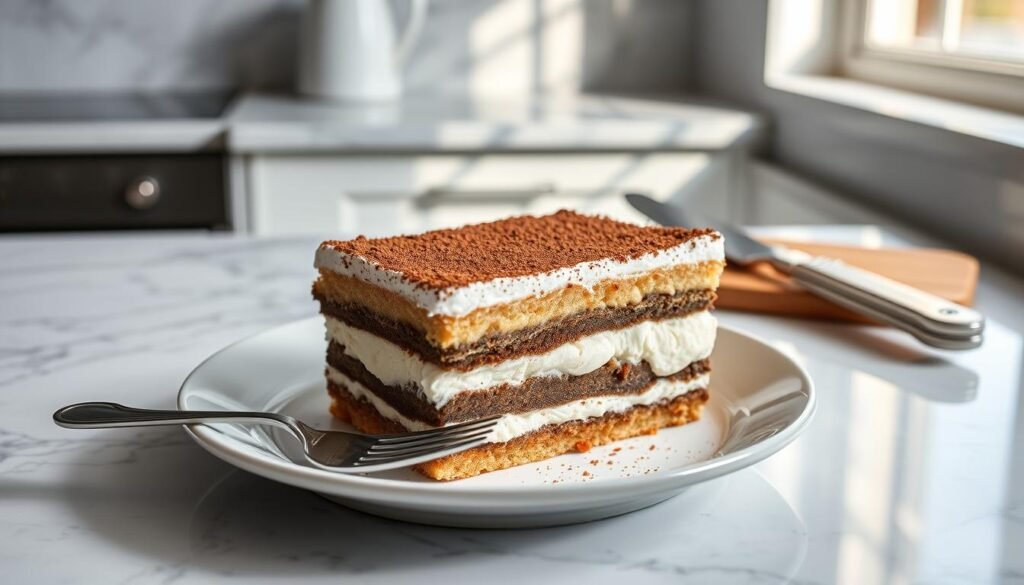
Portion into slices or cups
Cut into slices or place servings in individual cups before freezing. Cups freeze evenly and let us thaw only what we need. Smaller portions thaw faster and keep the layer contrast better than a full tray.
Double-wrap to prevent freezer burn
Wrap each portion tightly in plastic wrap, then add a layer of foil. This double barrier stops air and odors, reducing freezer burn and dry edges. Freeze portions on a flat tray until firm to avoid crushed tops, then stack or bag.
When to dust cocoa powder
We recommend we dust cocoa powder after thawing. Cocoa and other toppings can spot or absorb moisture in the freezer. A light dusting of cocoa right before serving gives a fresh look and bright flavor.
- Label each portion with freeze date and a use-by month (2–3 months quality window).
- Freeze full trays only if you accept softer textures after thawing.
- Good wrapping is the difference between creamy slices and a freezer-dry dessert.
| Option | Freezing ease | Best for |
|---|---|---|
| Individual cups | Easy | Single servings, neat thawing |
| Slices | Moderate | Ready-to-serve portions |
| Full tray | Harder | Storage when no portioning time |
How to Thaw Frozen Tiramisu Safely
We thaw frozen dessert slowly to keep dairy fillings safe and to preserve texture. A steady, cold thaw reduces bacterial risk and keeps the mascarpone mixture stable.
Thaw overnight in the refrigerator, not on the counter
Move portions from the freezer to the refrigerator and let them sit overnight. This slow transfer keeps the internal temperature low and avoids the danger zone for dairy and eggs.
Why microwaving harms the mascarpone mixture
Microwaving heats unevenly and forces the mascarpone mixture to break. Rapid heat causes the mixture to separate into grainy solids and watery liquid.
Expected texture changes in ladyfingers and cream layers
After thawing, ladyfingers will be softer and more saturated. Cream and cream layers often lose some firmness and may appear less defined than when fresh.
- Slice only after fully thawed and briefly re-chilled so pieces hold their shape.
- Do not thaw at room temperature; the outside warms first while the center stays frozen, raising risk.
- Refresh the top—dust cocoa right before serving to restore aroma and presentation.
- Keep the dessert refrigerated after thawing and avoid refreezing or repeated temperature changes.
| Method | Safety | Texture outcome |
|---|---|---|
| Refrigerator overnight | High | Best balance; minimal separation |
| Room temperature counter | Low | Risk of bacterial growth; uneven thaw |
| Microwave | Poor | Mascarpone mixture separates; grainy or watery |
Ingredients That Change How Long Tiramisu Lasts
Small swaps in the pantry can shift shelf life and texture more than most home cooks expect.
Raw eggs vs pasteurized eggs
Traditional mixes using raw eggs should be eaten sooner. When raw eggs are in the mix, plan for about 1–2 days of top safety and quality.
Using pasteurized eggs reduces risk and supports a longer refrigerated window—about 3–4 days in typical conditions.
Mascarpone vs cream cheese swaps
Mascarpone yields a silkier texture and milder flavor. Substituting cream cheese makes the filling firmer and tangier.
That swap can improve structural stability in the fridge but shifts the classic taste profile we expect.
Alcohol’s modest role
A dash of rum or Marsala adds aroma and may slightly slow spoilage, but alcohol does not replace refrigeration.
- Check our recipe ingredients to set a discard date: raw eggs → aim for day 2; pasteurized eggs → day 3–4.
- Keep short notes on each batch so storage matches the ingredients used.
| Ingredient | Effect on storage | Flavor/texture note |
|---|---|---|
| Raw eggs | Shortens to ~1–2 days | Smoother but higher risk |
| Pasteurized eggs | Extends to ~3–4 days | Safer with similar taste |
| Mascarpone | Standard stability | Creamy, mild flavor |
| Cream cheese | More structure | Firmer, tangier cheese note |
| Alcohol (rum/Marsala) | Minor preservative effect | Adds depth; not a safety substitute |
How Our Tiramisu Recipe Choices Affect Shelf Life
Selecting a cooked custard base instead of a no-bake mix can change safety and shelf performance. We compare common recipe routes and show which steps help the dessert keep its structure and flavor.

No-bake vs cooked egg yolks sugar custard
No-bake recipes rely on refrigeration to set the mixture. They are simple but depend on cold storage for safety.
Gently heating egg yolks sugar over a double boiler yields a thicker custard. That cooked yolks sugar step reduces bacterial risk and often makes the filling firmer.
Glass cups vs a large tray
Individual cups cut air exposure. Each serving stays sealed until we open it, so cups often hold quality longer than a cut tray.
A large cake pan loses protection after the first slice. Repeated utensil contact and open surface speed moisture migration and flavor loss.
Chill time for the best set and flavor
Chill at least 4–6 hours, though we usually aim for 6. Many recipes reach peak flavor after 1–2 days in the fridge.
- When you layer ladyfingers, dip ladyfingers just 1–2 seconds to avoid a soggy cake texture.
- Use a stable mixture and tight covering to slow moisture movement between layers.
- If you make tiramisu for an event, choose cups or a cooked-custard recipe for maximum hold time.
| Choice | Effect on shelf life | Best use |
|---|---|---|
| No-bake recipe | Relies on cold; gentler texture | Eat within 2–4 days for peak flavor |
| Cooked egg yolks sugar | More stable mixture; lower risk | Better for longer fridge windows |
| Glass cups | Less air exposure after serving | Ideal for parties and leftovers |
How to Tell When Tiramisu Has Gone Bad
A few simple checks with smell, sight, and touch reveal whether the tiramisu is safe to eat. Start with a quick visual scan, then smell the surface, and finally check texture before tasting.
Sour smell, off taste, or slimy texture
If the dessert gives a sour, sharp, or unusual odor, we discard it. An unpleasant taste or a slimy mouthfeel are immediate red flags. Do not taste more than a small amount if smell or look fail the check.
Watery, curdled, or separated whipped cream/mascarpone layers
Separation shows as watery weeping at the edges or curdled pockets in the cream. A whipped cream or mascarpone layer that breaks into grainy solids and liquid means structural failure and reduced safety.
Mold or discoloration on cocoa or cream
Cocoa powder can hide early mold, so inspect in bright light. Visible mold or any odd discoloration on the cream or cocoa requires immediate disposal—scraping it off is unsafe for moist desserts.
- Sour smell, off taste, slimy feel → toss.
- Watery separation, curdling in layers → toss.
- Mold or discoloration on top → toss; do not scrape.
- When in doubt, throw it out—especially after several days in the refrigerator.
| Spoilage sign | What we see or smell | Action |
|---|---|---|
| Sour odor | Sharp, unpleasant smell from the cream | Discard immediately |
| Separation | Watery edges or grainy mascarpone | Discard; not safe to serve |
| Mold | Green/blue spots or fuzzy growth on cocoa | Discard whole dish; do not scrape |
Quality vs Safety: When We Eat It and When We Toss It
A quick check of smell, texture, and days in the refrigerator tells us whether a slice is worth keeping. We use simple rules so serving a dessert is safe and still enjoyable.
Signs it’s past peak but may still be safe
Soggy ladyfingers, muted coffee flavor, or slightly loosened cream are usually quality issues, not safety failures. If the dessert smells normal and shows no separation, it can be eaten within the usual fridge window.
Keep in mind best flavor is typically within 2–3 days; homemade may be fine up to about 4 days when chilled and sealed.
Red flags that mean it’s not safe to eat
Discard immediately for any sour odor, visible mold, sliminess, or obvious curdling and separation of the cream. These signs indicate spoilage regardless of how many hours or days it spent cold.
- Use timelines as guardrails, but trust your senses.
- After events, add serving time to storage time before judging safety.
- Vulnerable people should avoid raw-egg versions and be extra cautious.
| Scenario | What we see | Action |
|---|---|---|
| Within 2–3 days | Good aroma, firm layers | Serve |
| Day 4 (homemade) | No spoilage signs | Eat with caution |
| Mold or sour smell | Off odor or spots | Discard |
Make-Ahead Timeline: Planning Tiramisu for Parties and Holidays
A simple schedule helps us balance chill time, service, and safe leftovers for holiday crowds. We plan backward from serving time so coffee and cocoa have space to meld without the dessert sitting too long at room temperature.

The best make-ahead window for peak coffee-cocoa flavor
Assemble the dessert the day before or at least 4–6 hours ahead. That minimum gives the layers time to set and prevents a soggy middle.
For peak flavor, we often wait 1–2 days so coffee and cocoa fully integrate into the mascarpone.
Serving strategy: keeping the dessert cold between slices
Slice only small portions and return the tray to the fridge between rounds. A chilled knife wiped between cuts makes cleaner slices and reduces warming at the surface.
For buffets, set the pan over an ice tray or bring chilled serving platters to slow warming.
Leftover plan: wrap, refrigerate promptly, and set a discard date
After service, we cover any remaining dessert tightly with plastic wrap or move portions to an airtight container and place them in the refrigerator immediately.
Label the container with a discard date based on standard fridge windows: homemade 2–4 days, store-bought 5–7 days after opening.
- Assemble: 1–2 days ahead for best flavor.
- Minimum chill time: at least 4–6 hours before serving.
- Serve: slice small batches, keep main dish chilled between rounds.
- Leftovers: wrap and refrigerate, write discard date on lid.
| When assembled | Chill before serving | Best eat window (fridge) |
|---|---|---|
| Same day | At least 4–6 hours | 2–3 days (homemade) |
| 1 day ahead | Overnight chill | 2–4 days (homemade) |
| Frozen then thawed | Thaw overnight in refrigerator | Consume within 24 hours after thaw |
Keep Tiramisu Fresh Longer With Smart Storage Habits
A few small daily habits make a big difference for keeping layered cream desserts fresh. Keep the refrigerator at or below 40°F (4°C) and store the pan in an airtight container or tightly sealed with plastic wrap and foil.
Place the dish in a stable fridge zone away from strong odors, label it with prep and discard dates in days, and minimize time at room temperature when serving.
Protect ladyfingers by sealing edges to slow drying and stop odor pickup. Ingredient choices like pasteurized eggs, mascarpone, or a splash of rum affect quality but never replace cold storage.
Freeze only if you won’t finish within a few days—wrap well, limit to 2–3 months, and thaw overnight in the refrigerator. Toss at the first sign of sour smell, separation, sliminess, or mold.